How to Create Viral Parody Songs with MuseGen: Turn Any Funny Idea Into a Track People Share

MuseGen Team
7/24/2026
Everybody has that one inside joke, that oddly specific daily frustration, that ridiculous group-chat moment that should be a song. The problem was always the same: you can write the funny lyrics, but you can't actually make the music. Not anymore. With MuseGen, you go from a punchline to a finished, shareable parody track in minutes — no instruments, no studio, no music theory. In this guide you'll learn how to write lyrics that land, pick a style built for virality, generate the song, and post it — the safe, legal way.

Why Parody Songs Go Viral (and Why Now Is the Perfect Time)
Parody works because it hits two feelings at once: recognition ("that's SO true") and surprise ("I can't believe they made a song about it"). When people feel both, they don't just laugh — they share, because sharing says something about them too.
- It's relatable. The best parodies are about tiny universal truths — Monday mornings, group projects, your cat ignoring you.
- It's remixable. A funny song becomes a sound other creators use, multiplying your reach.
- It's fast to consume. A 20-second musical punchline is perfect for short-form feeds.
- It's finally easy to make. AI text-to-music removed the one barrier that used to stop everyone — actually producing the track.
The joke was never the hard part. The music was. MuseGen fixes that.
What Makes a Great Parody Song
Before you touch a generator, know the four ingredients that separate a viral hit from a cringe miss.
A crystal-clear premise
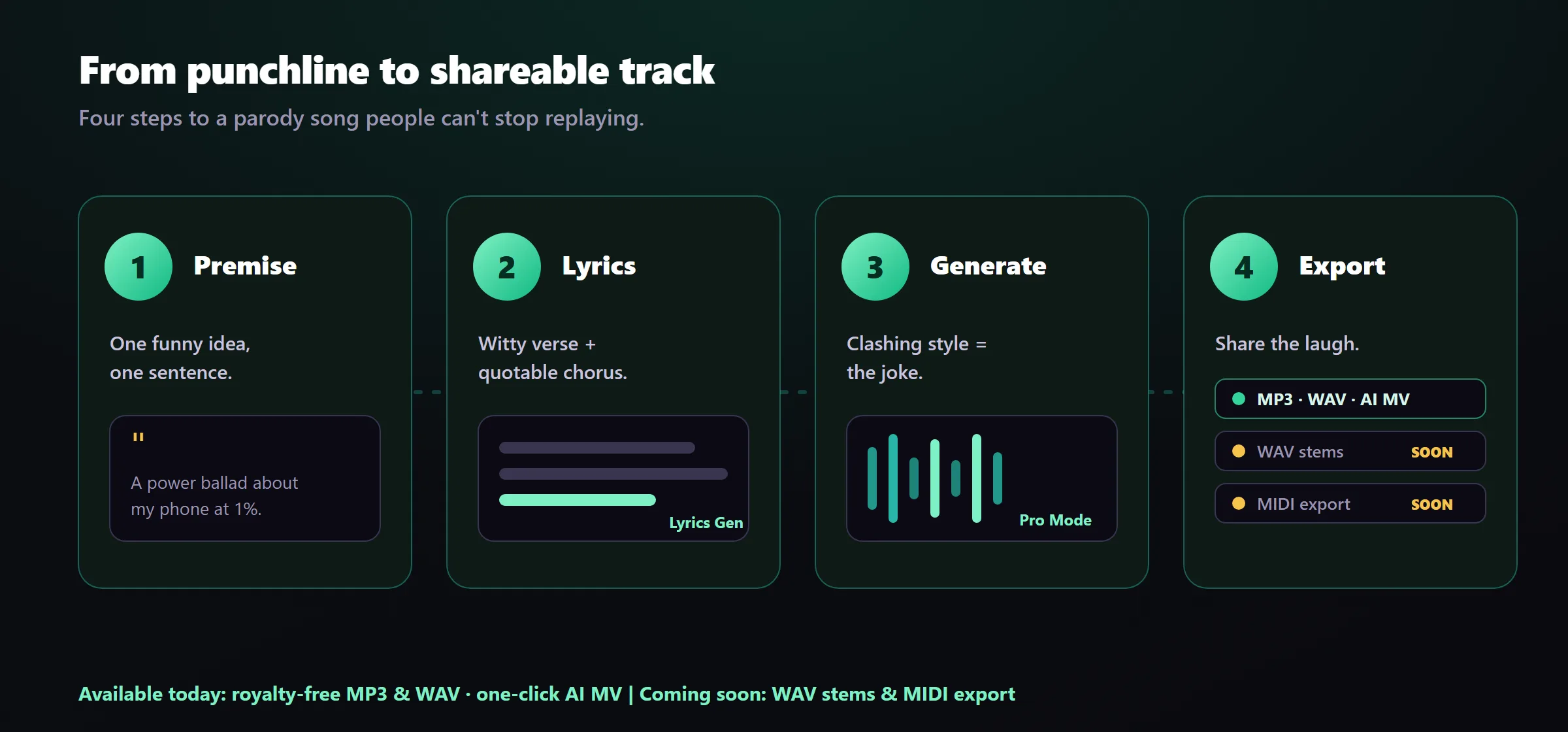
One idea, stated simply. "A power ballad about running out of phone battery." "A dramatic opera about the office microwave." If you can't say the premise in one sentence, tighten it until you can.
A style that clashes with the topic
Comedy lives in contrast. Tiny, mundane topics sound funniest in huge, serious genres — an epic orchestral anthem about losing your Wi-Fi, a heartbreak ballad about a burnt piece of toast. The bigger the mismatch, the bigger the laugh.
A hook you can't unhear
The chorus is everything. One short, repeatable line that sums up the joke — that's the part people quote, stitch, and share.
The right length
For short-form, aim for a punchy 15–40 second version that front-loads the funniest line. Save the full song for a "director's cut."
Step-by-Step: Make a Parody Song with MuseGen
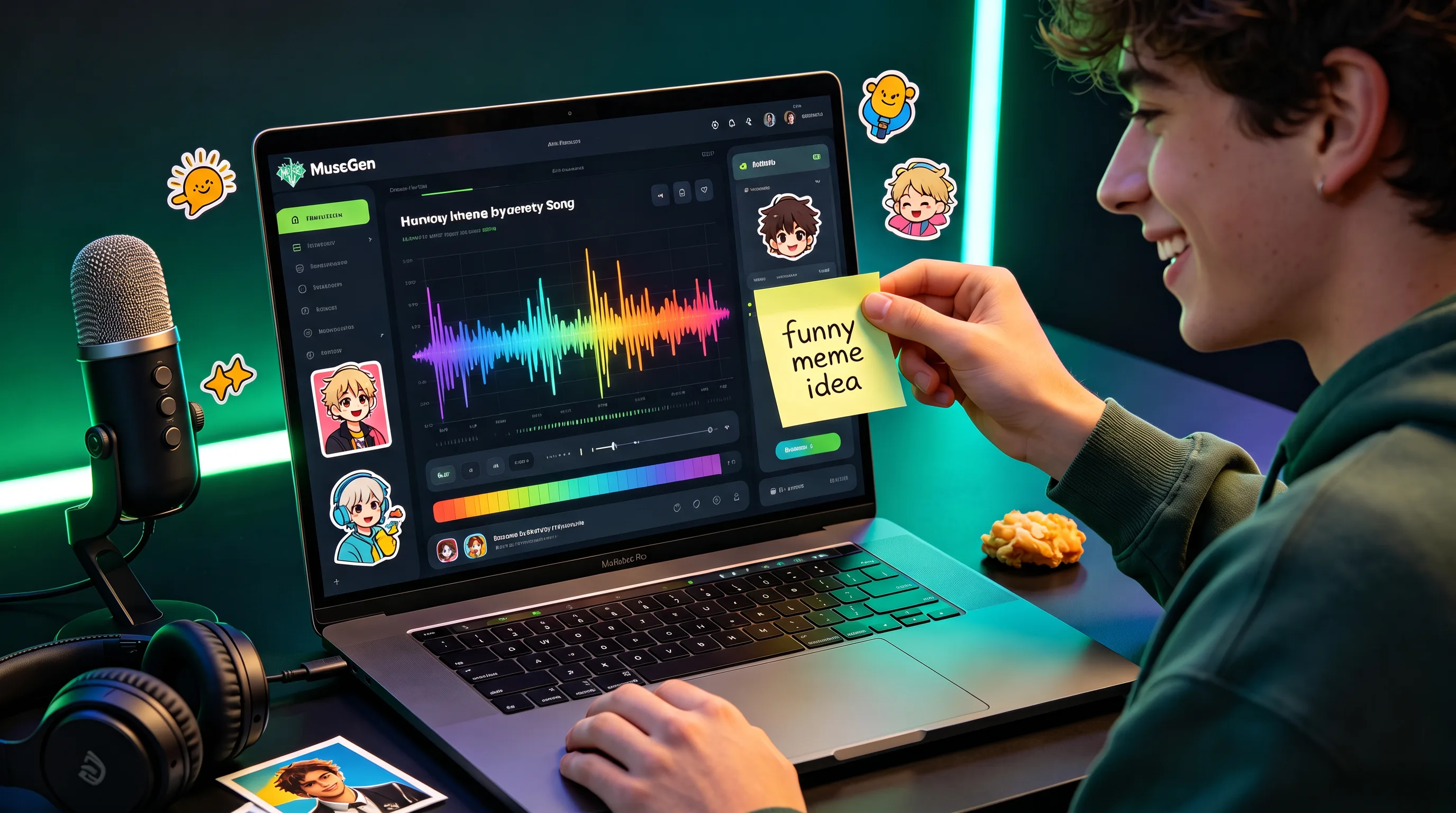
1. Sign up & open the MuseGen generator
Head to MuseGen and create a free account. Everything runs in your browser — no downloads. Open Music Generation and you're ready to go.
2. Write your parody lyrics (or let AI help)
Start from your one-sentence premise, then draft a verse and a repeatable chorus. Stuck? Use MuseGen's free Lyrics Generator to brainstorm lines, then punch them up with your own specifics — the tiny, true details are what make it funny. Keep the chorus short and quotable.
3. Pick a clashing style & write the prompt
Describe the song with five ingredients: genre, mood, tempo, instruments, and scene — and deliberately pick a genre that clashes with your topic. Here's a ready template:
Epic cinematic power ballad about a deadly serious subject: my phone hit 1% battery. Dramatic, over-the-top emotional, soaring male vocals, huge orchestral strings and pounding drums, key change into a massive chorus. 128 BPM. Funny because it treats a tiny problem like the end of the world.
In Pro Mode you can paste your own lyrics, add genre tags, choose vocal gender, or flip to instrumental-only for a karaoke version.
4. Generate, preview & pick the funniest take
Hit Create and let MuseGen produce a full track — melody, vocals, and mix. Generate two or three variations and play them back-to-back. Keep the one where the chorus makes you laugh out loud; that's your hook.
5. Refine the comedic timing
Use MuseGen's editing tools to sharpen the joke: section re-arrangement to put the funniest line first, lyric extension to add a punchline verse, and instrumental mode to make a clean karaoke cut. Comedy is timing — nudge sections until the payoff lands exactly right.
6. Export & post everywhere
When it's funny and catchy, export a royalty-free MP3 or high-quality WAV, spin up a one-click AI music video, and share straight to X, Facebook, Telegram, and WhatsApp. Lead with your hook in the first two seconds to stop the scroll.
Coming Soon: Even More Control for Serious Parody Producers
MuseGen is always shipping new tools, and a few highly requested ones are on the roadmap. Worth knowing now so you can plan your workflow:
- WAV stem export (coming soon). Soon you'll be able to download separated stems — vocals, drums, and instruments on their own tracks — so you can duck the music under a spoken punchline or remix the comedy in a DAW.
- MIDI export (coming soon). Export the underlying notes to tweak the melody, swap instruments, or line the track up perfectly with your video edit.
Available today: royalty-free MP3 and WAV export, the free Lyrics Generator, BPM Detector and MP3-to-WAV converter, plus section re-arrangement, lyric extension, instrumental mode, and one-click AI music video generation. Stem and MIDI export are coming soon — everything else in this guide you can do right now.
Stay Viral and Legal: The Parody Rules to Know
This is the part most guides skip — and the part that keeps your video online. The safest, most future-proof way to make parodies with MuseGen is to keep everything original.
Do this: write your own lyrics and let MuseGen generate an original melody and backing track in the style of a genre (e.g. "80s power ballad," "trap banger," "Broadway show tune"). Style is not copyrightable — a specific song is.
Avoid this: copying the melody or lyrics of a real, copyrighted song, uploading someone else's recording, or using an artist's name, voice, or likeness. "Parody" is a legal defense in some places, but it's narrow, varies by country, and platforms remove content long before a court ever weighs in.
Quick checklist before you post:
- Original lyrics? Yes — written by you.
- Original melody? Yes — generated fresh by MuseGen, not a cover of an existing song.
- No real artist's name, voice, or likeness? Correct — keep it generic.
- Genre/style reference only? Good — "sounds like an epic movie trailer," not "the song from that movie."
Keep it original and you get the best of both worlds: a track that's funny, shareable, and royalty-free to use.
Ready-to-Use MuseGen Prompt Templates for Parody Songs
Copy any of these, swap in your topic, and adjust to taste.
Template 1 — Epic Ballad About a Tiny Problem
Over-the-top epic power ballad, deadly serious and dramatic, about [a trivial everyday problem]. Soaring emotional vocals, huge orchestral strings, pounding drums, a giant key-change chorus. 126 BPM. Cinematic movie-trailer energy applied to something ridiculously small — that contrast is the joke.
Template 2 — Upbeat Pop Anthem for an Inside Joke
Catchy, feel-good pop anthem with a super-repeatable chant chorus about [an inside joke or daily habit]. Bright synths, hand-claps, four-on-the-floor beat, 118 BPM. Fun, sing-along, radio-ready, with one silly line the whole audience can shout. Loopable 20-second hook for short-form video.
Template 3 — Genre-Clash Comedy (Serious Genre, Silly Topic)
Dramatic [opera / gospel choir / gangsta rap / Broadway show tune] about [an extremely mundane topic]. Full commitment, zero irony in the performance, maximum intensity. The humor comes from performing a grand genre completely straight over an absurdly small subject. Punchy, quotable hook, high energy.
How to Use Your Parody Song Across Platforms
| Platform / use | Best version | Tip |
|---|---|---|
| TikTok / Reels / Shorts | Punchy 15–40s cut | Open on the funniest chorus line so people hear the joke instantly. |
| YouTube | Full "director's cut" + AI MV | Add extra verses and a one-click music video for a bigger payoff. |
| Group chats / Discord | MP3 clip | Perfect for inside jokes — the original audience that gets it. |
| Podcast / stream stinger | Instrumental or short hook | Use as a recurring bit or intro sting. |
| Karaoke / duets | Instrumental version | Generate an instrumental take so others can add their own take. |
Because every track is royalty-free, you can reuse the same song across all of them without licensing headaches.
Conclusion: Your Next Viral Hit Is One Joke Away
The funniest song idea you've ever had has been sitting in your notes app, waiting for a studio you didn't have. Now you have one. With MuseGen, you can turn a single punchline into an original, royalty-free parody track — and post it while the joke is still fresh. Write the premise, pick a genre that clashes, generate, refine the timing, and share. Somewhere out there, a whole feed is ready to laugh along.
Ready to make people laugh? Turn your funniest idea into an original, royalty-free parody song in your browser — create your parody song with MuseGen.
Frequently Asked Questions
How do I make a parody song with MuseGen?
Start with a one-sentence premise, write short witty lyrics (or brainstorm with the free Lyrics Generator), then write a prompt describing the genre, mood, tempo, instruments, and scene — ideally a serious genre clashing with a silly topic. Generate a few versions, keep the funniest, refine the timing with the editing tools, and export a royalty-free track to post.
Are parody songs I make with MuseGen legal to post?
They're safest when everything is original. Write your own lyrics and let MuseGen generate an original melody in the style of a genre — style isn't copyrightable, a specific song is. Avoid copying a real song's melody or lyrics, using someone's recording, or imitating a named artist's voice or likeness. Parody is a narrow legal defense that varies by country, so keeping your work original is the reliable path.
Can MuseGen export separate stems or MIDI for remixing?
Not yet — WAV stem export and MIDI export are coming soon. Today you can export royalty-free MP3 and WAV, use the free MP3-to-WAV converter, and refine tracks with section re-arrangement, lyric extension, and instrumental mode. Stems and MIDI are on the roadmap for producers who want DAW-level control.
What's the best style for a funny parody song?
Contrast is king. Pair a tiny, mundane topic with a big, serious genre — an epic power ballad about losing your keys, a dramatic opera about the office microwave. The mismatch between grand music and a small subject is what makes people laugh and share.
Do I need any music or production skills?
No. MuseGen handles melody, harmony, rhythm, vocals, and mixing — you just describe the song in plain language. The refine tools are simple, and the ready-to-use templates in this guide give you a reliable starting point even if you've never made a song before.
How long should a viral parody song be?
For short-form platforms, aim for a punchy 15–40 second version that front-loads the funniest line. You can then make a longer "director's cut" with extra verses for YouTube. Use lyric extension to lengthen a track and section re-arrangement to lead with your best joke.